Hungary Golden Visa: Guest Investor Residence Permit Guide (2026)
The Hungary golden visa, officially the Guest Investor Residence Permit (vendégbefektetői tartózkodási engedély), gives non-EU investors a Hungarian residence permit valid for up to 10 years, renewable once for up to another 10, in exchange for either €250,000 in units of a qualifying Hungarian real estate fund held for at least five years or a €1,000,000 donation to a higher-education institution run by a public-interest trust foundation.[1][3] There is no minimum stay, the permit carries an unrestricted right to work, and spouses, minor children and dependent parents can be included.[3][6]
The program has run since 1 July 2024 under Act XC of 2023.[9][12] It is still open as of 2 October 2026, but it was created by the Orbán government, and the Tisza Party, which won a two-thirds majority on 12 April 2026, has not said what it plans to do with it.[17][18] This guide covers the verified rules, full cost, process, tax, the road to permanent residency and naturalisation, and the political risk.
Last verified:
How the Guest Investor Program works
The guest investor regime is part of Act XC of 2023 on the general rules for the entry and residence of third-country nationals (the Btátv.), in force for guest investors since 1 July 2024.[9][12] Applications are decided by the National Directorate-General for Aliens Policing (Országos Idegenrendészeti Főigazgatóság, OIF) under the Ministry of Interior; consulates issue the entry visa.[2] Two documents are issued in sequence:
- Guest investor visa: a national visa valid for up to 6 months, applied for at a Hungarian consulate. It cannot be extended. Visa-exempt nationals may skip it and apply for the permit in Hungary within 30 days of first lawful entry.[1][3]
- Guest investor residence permit: applied for inside Hungary within 30 days of entry. It is valid for up to 10 years, renewable once for up to 10 more, and its validity may exceed that of the holder's passport.[1][3]
Only third-country nationals qualify: not EEA or Swiss nationals or their family members; stateless persons may apply.[1] Hungary tried this before. The 2013–2017 "residency bond" program raised about HUF 590 billion through mostly offshore intermediaries and, by Transparency International's estimate, cost the budget at least HUF 21 billion compared with ordinary borrowing, which explains much of today's political sensitivity.[16]
Uptake has been modest. By the end of February 2025, 192 guest investor visa applications and only 25 permit applications had been filed; about a third of visa applicants were Russian or Belarusian nationals, many of whom were refused.[14] At the end of 2025 there were 142 valid guest investor permits.[15]
Hungary residency by investment: the two qualifying routes
There are two ways to qualify. A third route, buying residential property worth at least €500,000, was in the original law with a 1 January 2025 start date, but an amendment published in the Hungarian Gazette on 20 December 2024 removed it before it took effect, so it was never available.[12][13]
Hungary golden visa fund route (€250,000)
You buy at least €250,000 of investment units issued by a real estate fund registered with the Magyar Nemzeti Bank (the central bank), in your own name.[1] Conditions that sharply limit which funds qualify:[1][3]
- at least 40% of the fund's net asset value must be invested in residential real estate in Hungary;
- the fund manager must appear on the list of qualified market participants under Act XXX of 2016 on defence and security procurement;
- the manager must clear size thresholds (assets above €100 million, €500 million or €600 million depending on its licence and fund type);
- you must hold the units for at least five years, in a securities sub-account blocked for that period, and release the custodian from securities secrecy so OIF can verify the block.
OIF's list of eligible managers names only two: SPRINT Asset Hungária Alapkezelő Zrt. and Gránit Alapkezelő Zrt. (list last edited 23 January 2025).[5] SPRINT markets the SPRINT Hungary Real Estate Development and Investment Fund, some of whose unit classes are designed for the program.[23] OIF keeps no register of funds or distributors.[3] At renewal you must still own the units.[1] Returns and exit terms are set by the fund documents, not the law.
Hungary residency by donation (€1,000,000)
The alternative is a cash donation of at least €1,000,000 for education, research or the arts to a higher-education institution maintained by a public-interest trust foundation (a KEKVA foundation); OIF links the list of eligible universities.[2] The money is not returned. In exchange, the permit can be renewed without any further investment.[1]
Routes compared
| Route | Minimum | Holding period | Refundable? | Condition at renewal |
|---|---|---|---|---|
| Real estate fund units (MNB-registered, ≥40% Hungarian residential) | €250,000 | 5 years, blocked sub-account | Depends on fund value and exit terms | Must still hold the units |
| Donation to a KEKVA-maintained university | €1,000,000 | None (one-off gift) | No | No further investment needed |
| Residential property purchase | €500,000 (proposed) | n/a | n/a | Repealed in December 2024, never in force |
Hungary golden visa requirements 2026
For the visa stage, OIF requires:[2]
- proof that the investment has already been made (a fund manager or distributor certificate, or the university's confirmation that the donation arrived), or a signed declaration of which investment you will make, plus a bank certificate that the full amount is durably available;
- proof of the lawful origin of funds (public or fully probative private documents, or evidence of taxable employment or business income);
- proof of an actual address in Hungary (a lease, a deed, a free-use agreement or a paid booking);
- a valid passport and one photo;
- evidence of means and of full health-care cover. This is examined at the visa stage only, not for the permit.[3]
OIF screens investments against UN and EU restrictive measures, and Hungary's Constitution Protection Office takes part in security vetting; it recommended refusing several Russian applicants in 2024–2025.[2][14] A clean record is essential: the visa is revoked for expulsion orders, SIS alerts or false statements.[2]
If you apply with a declaration, OIF's FAQ says the investment must be made within 3 months of the visa being issued and proven on Enter Hungary within 3 months of entry;[3] the permit information sheet gives the visa's validity (or six months from first entry for visa-exempt nationals) as the outer limit.[1] For the permit, you file inside Hungary within 30 days of entry, give biometrics in person, and show your Hungarian address and passport.[1] Documents not issued in Hungarian or English need a certified Hungarian translation by the state translation office (OFFI).[3]
Hungary golden visa cost
| Item | Amount | Notes |
|---|---|---|
| Qualifying investment | €250,000 (fund) or €1,000,000 (donation) | Fund units are held for 5+ years; the donation is not returned |
| Guest investor visa fee (consulate) | €110 per applicant | Appeal against refusal €160[4] |
| Residence permit fee, in Hungary | HUF 39,000 (≈€106) in person; HUF 26,000 (≈€71) via Enter Hungary | Per applicant[4] |
| Permit renewal (after up to 10 years) | HUF 26,000 (≈€71) | Must be filed at least 30 days before expiry[4][1] |
| Fund-side administration fee | €25,000 + €1,000 per family member (agent-reported) | Quoted by one adviser; not in any official schedule, so confirm with the fund[22] |
| Blocked securities account (5 years) | €8,700 (agent-reported) | Custody of the blocked sub-account[22] |
| Legal / agent fees | Varies; quoted case by case | Not regulated; get written fixed-fee quotes |
| Certified translations | Varies by volume | Non-English documents need OFFI Hungarian translation |
| Health insurance | Varies by age and insurer | Needed for the visa application[3] |
| Stamp duty / VAT / transfer tax | None on fund units bought at issue | Transfer duty applies only to direct property deals, which do not qualify |
What a realistic budget looks like
Government charges are under €200 per person.[4] The real cost of the fund route is the fund's own fees, custody of the blocked account, adviser fees and, above all, the opportunity cost and market risk of locking €250,000 into an illiquid Hungarian residential fund for five years. On the agent-reported figures above, a single investor should budget about €284,000 in cash outlay before adviser fees.[22] Neither eligible manager publishes a full fee schedule on its public pages, so treat any all-in quote as unverified until you see the fund documents.[23] The donation route is the opposite: high and final, but with no investment risk or holding condition.
At the ECB rate of 1 October 2026 (€1 = $1.1298), the fund minimum equals about $282,000 and the donation about $1.13 million.[11]
Family members and what they cost
Family members do not get guest investor permits. They apply for a family reunification residence permit (családi együttélés biztosítása) tied to the investor's permit.[3] Under OIF's rules, eligible family members are:[6]
- the spouse or registered partner;
- minor children of the couple, including adopted and foster children;
- minor children of either spouse over whom that spouse has custody;
- dependent parents of the investor or the spouse;
- siblings or direct-line relatives who cannot care for themselves for health reasons.
Healthy adult children are not on the list. Family permits linked to a guest investor run for up to 10 years, renewable for up to 10 years, and are exempt from the usual 90-days-in-180 presence test at renewal.[6] Family members may work without restriction.[1]
Family members may file at the same time as the investor, but visa-required relatives cannot enter as family members until the investor's permit is granted, so they usually apply at a consulate.[3] Each pays the standard per-person fee: HUF 26,000–39,000 in Hungary, or €110 for a residence permit and entry visa at a consulate.[4] No extra investment is required per dependant; one adviser reports a fund-side fee of €1,000 per family member.[22]
Step-by-step application process
The sequence follows OIF's published procedure for a visa-required applicant.[1][2][3] Visa-exempt nationals skip step 3, file for the permit within 30 days of first lawful entry, and must prove the investment within six months of that entry.[1]
- 1
Choose the route and run source-of-funds checks
Decide between the €250,000 fund route and the €1M donation, and assemble documents proving the lawful origin of the money. For the fund route, pick a manager from OIF's list and review the fund documents, fees and exit terms.
- 2
Secure a Hungarian address
Sign a lease or arrange accommodation; proof of address is needed for both the visa and the permit.
- 3
Apply for the guest investor visa at a consulate
File with proof of the completed investment, or a signed declaration plus a bank certificate showing the funds. The fee is €110 and the visa is valid for up to 6 months.
- 4
Make the investment within 3 months
If you applied with a declaration, subscribe to the fund units (placed in a blocked sub-account for 5 years) or transfer the donation within 3 months of the visa being issued.
- 5
Enter Hungary and file for the residence permit within 30 days
Apply online through Enter Hungary or in person at the OIF regional directorate for your address, and upload proof of the completed investment. After an online filing, biometrics and signature must be given in person within 15 days of the confirmation.
- 6
Family members apply
Spouse, children and dependent parents file for family reunification permits, at the same time or later. Visa-required relatives apply from abroad.
- 7
Receive the permit card
The card is posted to your Hungarian address. Report any change to the investment data within 5 days. Renew at least 30 days before expiry: fund investors must still hold their units, while donors renew without a new investment.
Timeline from start to card
| Stage | Official rule | Typical in practice |
|---|---|---|
| Document preparation and due diligence | — | 2–4 weeks[22] |
| Guest investor visa decision | No published deadline | About 1 month (agent estimate)[22] |
| Making the investment | Within 3 months of visa issue | Days to weeks[3] |
| Filing for the permit | Within 30 days of entry | —[1] |
| Permit decision | 21-day administrative deadline, excluding time until the investment is proven and time for document requests | About 1 month (agent estimate)[1][22] |
| Card delivery by post | — | About 1 week[22] |
| Total | — | Roughly 3–6 months (one adviser quotes 5+ months)[22] |
Tax: what holding the permit does and does not trigger
The permit does not by itself make you tax resident. A third-country national is resident if permanently settled in Hungary; otherwise the tests apply in order: only permanent home in Hungary; centre of vital interests in Hungary; or at least 183 days in Hungary in the calendar year.[19] With no minimum stay, many holders never become resident. Tax treaties decide dual-residence cases.
If you do become resident:[20][21]
- Personal income tax: flat 15%, including on dividends, interest and capital gains. Social contribution tax can apply to some investment income on top, up to a cap; confirm the current figure with an adviser.
- Long-term investment accounts: 15% if closed within 3 years, 10% in years 4–5, 0% after 5 years.
- No net wealth tax.
- Inheritance and gift tax: 18%, or 9% on residential property; transfers between lineal relatives and spouses are exempt.
- Property transfer duty: 4% up to HUF 1 billion and 2% above, capped at HUF 200 million per property; not relevant to fund units bought at issue.
- VAT: 27% standard.
Fund distributions or redemption gains may be taxed in Hungary even for non-residents, subject to treaties, so ask the manager for a tax memo. Rates are from PwC summaries last reviewed on 1 July 2026; check for changes the new government may since have announced.
Hungary golden visa path to citizenship
Hungary does not sell citizenship, and the guest investor permit does not shorten naturalisation. It can be the first step on the ordinary route, provided you actually live in Hungary.
Permanent residency
The guest investor permit is not excluded from the national residence card (nemzeti tartózkodási kártya), Hungary's permanent status. It requires at least 3 years of lawful, uninterrupted residence before applying, secured housing and livelihood, health cover, a clean record and a Hungarian cultural knowledge exam certificate; OIF's processing deadline is 70 days.[7] The alternative is the EU long-term residence card after 5 years of lawful, uninterrupted residence.[8] OIF does not publish how it treats long absences by guest investors, so those who rarely visit should not count on qualifying.
Naturalisation
Under section 4(1) of Act LV of 1993, a foreigner may be naturalised after 8 years of continuous residence in Hungary, with a clean record, secured livelihood and housing, no security concerns, and a pass in an exam on constitutional basics taken in Hungarian (or an exemption).[10] Shorter periods apply only in special cases, such as 3 years for someone married to a Hungarian citizen for at least 3 years. Dual citizenship is permitted. If a passport is the main goal, compare our guide to residency routes with the fastest naturalisation and our explainer on whether EU citizenship can still be obtained through investment.
Pros and cons
Pros
- Long permit: up to 10 years, renewable once for 10 more
- No minimum stay requirement for the investor; family permits also renew without the usual 90-day presence test
- Unrestricted right to work and run a business in Hungary
- Schengen residence: travel in other Schengen states for 90 days in any 180
- Low government fees (under €200 per person) and a 21-day official permit deadline
- Hungary's 15% flat income tax, with no wealth tax, if you do relocate
Cons
- Political risk: the program was created by the previous government, and the Tisza majority has not committed to keeping it
- Only two eligible fund managers, so investors have little choice and limited fee transparency
- €250,000 locked for 5 years in a concentrated Hungarian residential fund, with no guaranteed return
- Direct property purchase does not qualify, since that route was repealed before launch
- The €1M donation is lost entirely
- No faster route to permanent residency or citizenship: 3 years of real residence for permanent status, 8 for naturalisation, plus Hungarian exams
- Small, recent program (142 valid permits at end-2025) with heavy scrutiny of some nationalities
Recent changes and what to watch
- 1 July 2024: guest investor visa and permit introduced under Act XC of 2023 with a €250,000 fund route, a €1M donation route and a €500,000 residential property route due from 1 January 2025.[12]
- Autumn 2024 – January 2025: the first qualified fund managers (SPRINT Asset, then Gránit) cleared for the program.[14][5]
- 20 December 2024: property route repealed in the Hungarian Gazette before it took effect.[12][13]
- 12 April 2026: Tisza wins 141 of 199 seats, a two-thirds majority. Péter Magyar becomes prime minister on 9 May 2026; the government is sworn in on 12 May.[18]
- 6 June 2026: new guest worker permit applications stopped by Government Decree 92/2026 (VI. 5.). Guest investor rules are unchanged.[24][18]
- 17 September 2026: police investigation opened into the 2013–2017 residency bond scheme.[16]
What to watch: any amendment to the Btátv. guest investor sections, changes to the KEKVA university foundations that receive donations, and transitional rules. Under the June 2026 guest worker decree, existing holders could still renew under the old rules and applications paid by 5 June were processed.[24] That suggests, but does not guarantee, how existing investors might be treated. Fund investors should also ask what happens to their units and the renewal condition if the program ends during the 5-year lock.
Who it suits and who should look elsewhere
It suits non-EU investors who want a long-dated Schengen residence permit with almost no maintenance, who are comfortable with five years of Hungarian residential real estate exposure, or who want a Central European base with a 15% flat tax if they later move. Families for whom a €1M donation is affordable get the simplest version: no holding condition and renewal without reinvestment.
Look elsewhere if you want to own property directly, need a near-term path to an EU passport, want to diversify across managers, cannot accept the risk of a policy change, or are a Russian or Belarusian national, a group that has faced frequent refusals on security grounds.[14]
Comparable European residency programs
At a similar budget, the closest alternative is the Greek golden visa. It has property routes from €250,000 for conversions and from €400,000–€800,000 depending on location, also no stay requirement, but permits renewable every five years. Portugal's investment fund route needs €500,000, and its naturalisation clock is now 10 years. Investors focused on tax and lifestyle may prefer Italy's investor visa paired with its flat-tax regime, or Malta's permanent residence program (MPRP), which grants permanent status from the start. Cyprus permanent residency requires €300,000 in property plus proof of income. Lower-cost options include Latvia's company-investment residence permit, Montenegro's property-based residence and Bulgaria's investor residence. For a side-by-side table see our comparison of European golden visa programs. Our list of programs that have already shut, including the Spanish golden visa that closed in April 2025, shows why policy risk deserves weight. For the wider landscape, start at the golden visa hub or read how residency programs differ from passport programs.
Hungary golden visa FAQ
Is the Hungary golden visa still open in 2026?
Yes. On 2 October 2026 both routes, the €250,000 real estate fund and the €1M university donation, were open, and OIF's information sheets carried no suspension notice.[1] The Tisza government elected on 12 April 2026 has a two-thirds majority and could change the law quickly. It has not stated a position on the program, though commentators expect a review.[17] When it restricted guest worker permits in June 2026, existing holders kept their permits, a useful but non-binding precedent.[24] Before investing, check the Magyar Közlöny for new legislation and ask about transitional protection for filed applications.
What is Hungary residency by donation?
It is the alternative route: a one-off, non-refundable donation of at least €1,000,000 to a higher-education institution maintained by a public-interest trust foundation (KEKVA), earmarked for education, research or the arts.[2] You need the university's confirmation that the money arrived. The advantage is that the permit can be renewed with no further investment and no holding period to manage.[1]
Can I still get a Hungary golden visa by buying property?
No. A €500,000 residential property route was included in the original 2024 rules, scheduled to start on 1 January 2025, but an amendment published on 20 December 2024 removed it before it took effect.[12] Buying a home in Hungary is legal for many foreigners, subject to local permits, but it does not qualify for a guest investor permit. Exposure to property is available only indirectly, through the qualifying funds.
Do I have to live in Hungary to keep the permit?
No. OIF confirms that there is no minimum stay for the guest investor permit, and that it does not check the usual 90-days-in-180 presence test at renewal.[3] Family permits linked to a guest investor are also exempt from that test.[6] Note, however, that permanent residency and naturalisation both require uninterrupted residence, so a permit you rarely use will not lead to either.
How long does the Hungary residency by investment process take?
Plan on roughly three to six months. The consular visa typically takes about a month, the investment must be made within three months of the visa, and the permit must be filed within 30 days of entry.[3] OIF's deadline for the permit decision is 21 days, but it excludes the time until you prove the investment and time spent on document requests,[1] so advisers quote about a month for that stage and five months or more overall.[22]
Can my parents and children be included?
Yes, through family reunification permits rather than as co-investors. Eligible relatives are your spouse or registered partner, minor children (including adopted children and your or your spouse's children in custody) and dependent parents of you or your spouse.[6] Their permits can run for up to 10 years, in line with yours. Adult children qualify only if they cannot care for themselves for health reasons. Each person pays the standard permit fee; no extra investment is needed.[4]
Is there a Hungary golden visa path to citizenship?
Only through ordinary naturalisation; the permit gives no shortcut. Hungarian law requires eight years of continuous residence, a clean record, secured livelihood and housing, and a pass in a constitutional-basics exam taken in Hungarian.[10] Permanent residency through the national residence card is possible after three years of uninterrupted residence plus a Hungarian cultural knowledge exam.[7] Investors who do not actually move to Hungary will not qualify for either.
Which Hungary golden visa properties qualify?
No direct property purchase qualifies. A residential property route of at least €500,000 was in the original law, but an amendment published on 20 December 2024 removed it before it took effect[12][13]. Instead you buy at least €250,000 of units in a real estate fund registered with the Magyar Nemzeti Bank, with at least 40% of its net asset value in Hungarian residential real estate, and hold them for five years[1][3]. Buying a flat yourself does not count.
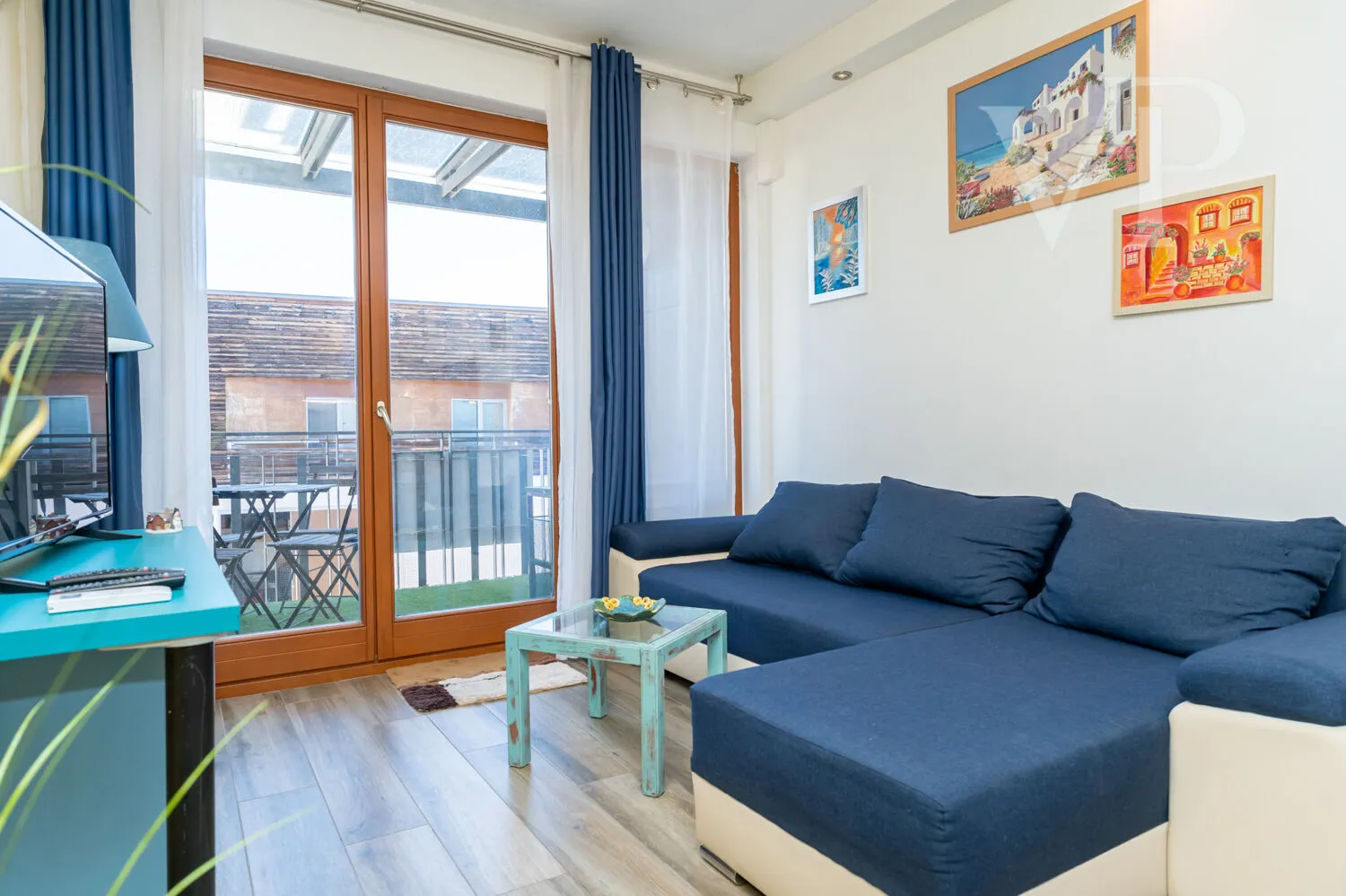
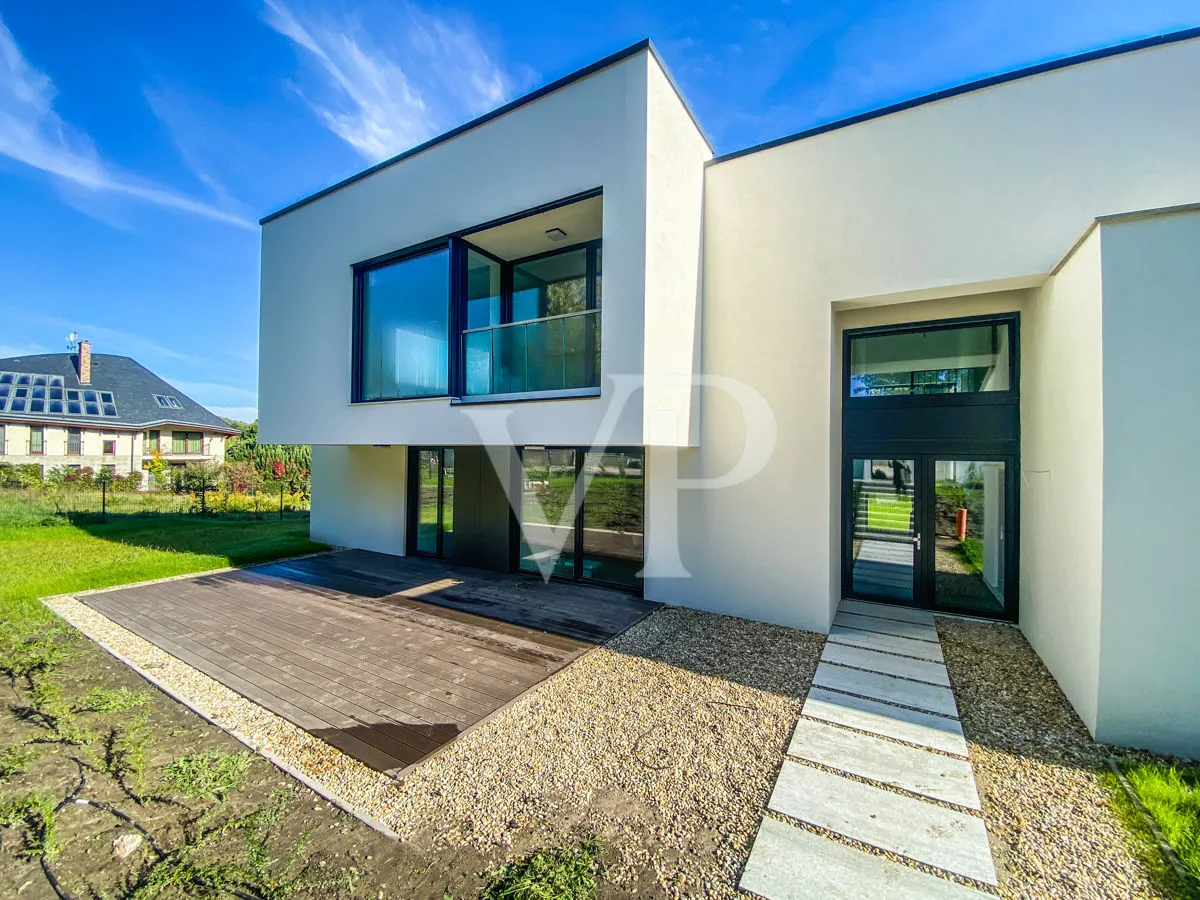
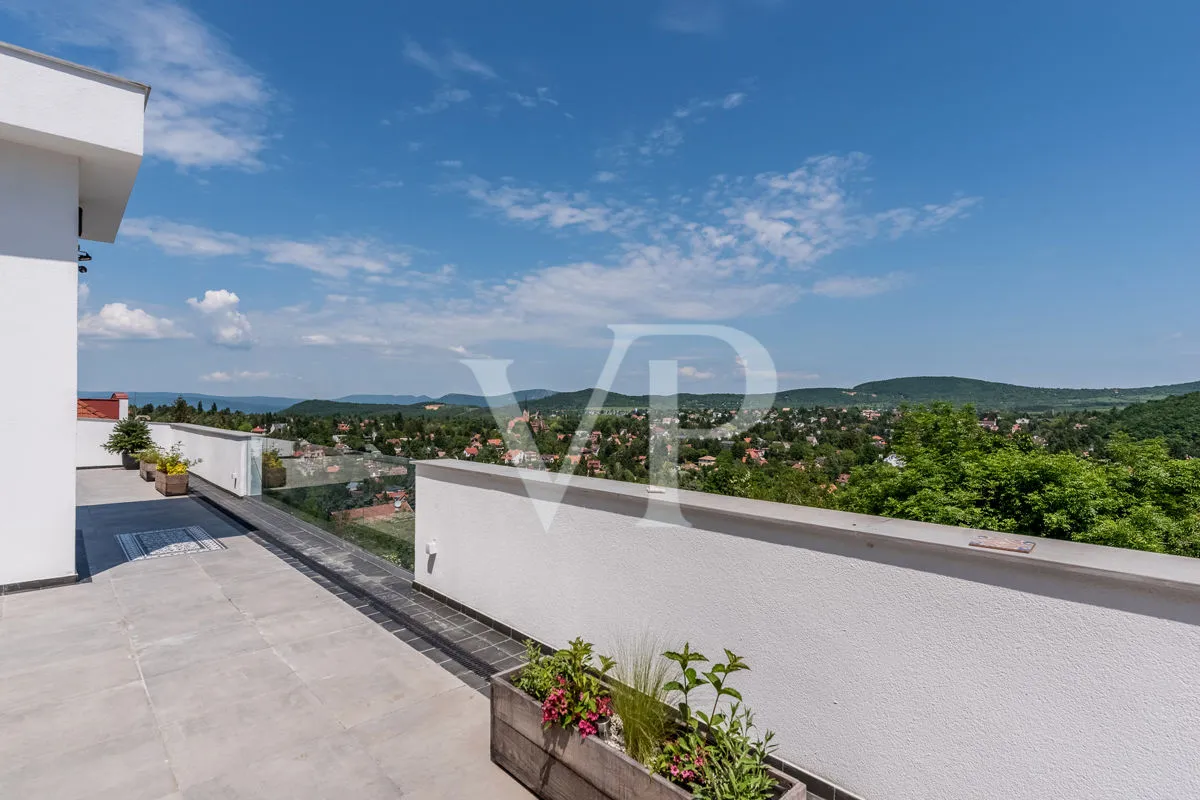
Properties for sale in Hungary
Properties for sale in Hungary from realestateabroad.com and developers. Buying property does not by itself qualify for this programme.
€1,900,000
Exceptional villa on the north shore of Lake Balaton - Tuscan atmosphere, contemporary luxury
8242 BALATONUDVARI (HUN)
€961,000
Lake Balaton. Panorama, elegance, and modern comfort. Stylish house in Tihany.
8237 TIHANY (HUN)
€275,000
Apartment for sale on the shore of Lake Balaton, in the heart of Balatonfüred
8230 BALATONFÜRED (HUN)
€688,000
Fabulous house designed for happiness in Szentendre
2000 SZENTENDRE (HUN)
€2,100,000
An Italian-style villa with spacious spaces
1029 BUDAPEST (HUN) – II. KERÜLET
HUF 188,700,000
NEWLY BUILT APARTMENT IN THE PETNEHÁZYRÉT AREA OF DISTRICT II.
1021 BUDAPEST (HUN) – II. KERÜLET
HUF 380,000,000
A villa with every luxury, with a stunning ROOFTOP
1029 BUDAPEST (HUN)
€819,000
Newly built semi-detached house for sale on Hidegkúti Road.
1028 BUDAPEST (HUN)
€740,000
Classic house in a beautiful setting close to the French School.
1028 BUDAPEST (HUN) – II. KERÜLET
€858,000
Newly built semi-detached house for sale on the quiet Rodostó Street
1028 BUDAPEST (HUN)
€3,380,000
Villa with 180 degree panoramic view in the II. district
1029 BUDAPEST (HUN)
€1,176,842
Newly built apartment for sale in the cozy green belt Völgy street
1021 BUDAPEST (HUN) – II. KERÜLET






Related programs
- GreeceOpen (zone thresholds since Sep 2024; transfer-tax rise announced)Greece residency by investment
Minimum investment: €250k conversion/listed building · €400k regions · €800k Attica, Thessaloniki & large islands
- PortugalOpen (property route closed Oct 2023)Portugal business investor visa
Minimum investment: €500k fund / €250k culture donation (€200k low-density)
- CyprusOpen (criteria of May 2023; tightening announced Sep 2026)Cyprus residency by investment
Minimum investment: €300,000 (new home + VAT, commercial property, company or fund) + €50,000/yr income
- MaltaOpen (MPRP, fees reformed July 2025)Malta golden visa
Minimum investment: €99,000 fees + €375,000 property or €14,000/yr rent
- LatviaOpen, narrowed: company route only since 15 Sep 2026 (property and deposit routes abolished)Latvia golden visa fund
Minimum investment: €50,000 company share capital + €10,000 state payment (€100,000 for larger companies; €150,000 fund route not yet operational)
- ItalyOpen (thresholds unchanged since 2020; Russia/Belarus suspended)Italy golden visa cost
Minimum investment: €250k innovative startup · €500k Italian company · €1M donation · €2M government bonds
Comparisons that cover this program
Sources
- 1.Vendégbefektetői tartózkodási engedély (Guest investor residence permit) – information sheet – Országos Idegenrendészeti Főigazgatóság (National Directorate-General for Aliens Policing)Official source (October 2, 2026)
- 2.Vendégbefektetői vízum (Guest investor visa) – information sheet – Országos Idegenrendészeti FőigazgatóságOfficial source (October 2, 2026)
- 3.Vendégbefektetői vízum és engedély – gyakran ismételt kérdések (Guest investor visa and permit FAQ) – Országos Idegenrendészeti FőigazgatóságOfficial source (October 2, 2026)
- 4.Eljárási díjak (Procedural fees for immigration applications) – Országos Idegenrendészeti FőigazgatóságOfficial source (October 2, 2026)
- 5.Minősített piaci jegyzéken szereplő ingatlan-alapkezelők (Qualified real estate fund managers) – Országos Idegenrendészeti FőigazgatóságOfficial source (October 2, 2026)
- 6.Családi együttélés biztosítása célú tartózkodási engedély (Family reunification residence permit) – Országos Idegenrendészeti FőigazgatóságOfficial source (October 2, 2026)
- 7.Nemzeti tartózkodási kártya (National residence card) – Országos Idegenrendészeti FőigazgatóságOfficial source (October 2, 2026)
- 8.EU tartózkodási kártya (EU long-term residence card) – Országos Idegenrendészeti FőigazgatóságOfficial source (October 2, 2026)
- 9.2023. évi XC. törvény a harmadik országbeli állampolgárok beutazására és tartózkodására vonatkozó általános szabályokról (Act XC of 2023) – Nemzeti Jogszabálytár (National Legislation Database)Official source (October 2, 2026)
- 10.1993. évi LV. törvény a magyar állampolgárságról (Act LV of 1993 on Hungarian Citizenship) – Wolters Kluwer Jogtár (October 2, 2026)
- 11.Euro foreign exchange reference rates (1 October 2026) – European Central BankOfficial source (October 2, 2026)
- 12.Hungary Guest Investor Program – Wikipedia (October 2, 2026)
- 13.Breaking: Hungary Removes Real Estate from Guest Investor Program – Savory & Partners (October 2, 2026)
- 14.Csak 25-en kértek vendégbefektetői tartózkodási engedélyt (Only 25 applied for guest investor residence permits) – HVG (October 2, 2026)
- 15.Uniós szorításba kerül Magyarország bevándorlási szabályozása (Hungary's immigration rules under EU pressure) – Portfolio.hu (October 2, 2026)
- 16.Letelepedési kötvények: hűtlen kezelés miatt indul eljárás (Settlement bonds: investigation opened) – Portfolio.hu (October 2, 2026)
- 17.After the Election: Is Hungary's Golden Visa on the Brink? – IMI Daily (October 2, 2026)
- 18.2026 in Hungary – Wikipedia (October 2, 2026)
- 19.Hungary – Individual – Residence – PwC Worldwide Tax Summaries (October 2, 2026)
- 20.Hungary – Individual – Taxes on personal income – PwC Worldwide Tax Summaries (October 2, 2026)
- 21.Hungary – Individual – Other taxes – PwC Worldwide Tax Summaries (October 2, 2026)
- 22.Hungary Golden Visa Program 2026 – Immigrant Invest (October 2, 2026)
- 23.SPRINT Hungary Real Estate Development and Investment Fund – SPRINT Asset Hungária Zrt. (October 2, 2026)
- 24.Módosult a vendégmunkás-tartózkodási engedélyekre vonatkozó szabályozás (Guest worker permit rules amended) – Országos Idegenrendészeti FőigazgatóságOfficial source (October 2, 2026)
This page is general information, not legal, tax or financial advice. Program rules change often; confirm every figure with the official authority or a licensed adviser before you invest.